Sustainability: The Future Answer to the Energy Crisis of 2026
The world has seen this before. The 1973 oil embargo. The 1979 Iranian Revolution. The Gulf War shock. The post-COVID spike of 2021. And now, March 2026: the Iran-US/Israel conflict has destroyed energy infrastructure across the Middle East and the International Energy Agency has declared the largest supply disruption in the history of the global oil market. 5 crises in 50 years. Each one carries the same structural lesson. Each time, the global industrial base finds a way to forget it.
The lesson is straightforward. Concentrated, geopolitically contested fossil fuel supply chains are structurally fragile. Every time they fracture, the response is the same: retreat to coal, subsidize prices, defer transformation. These are demand-side tourniquets.
What Has Changed in 2026
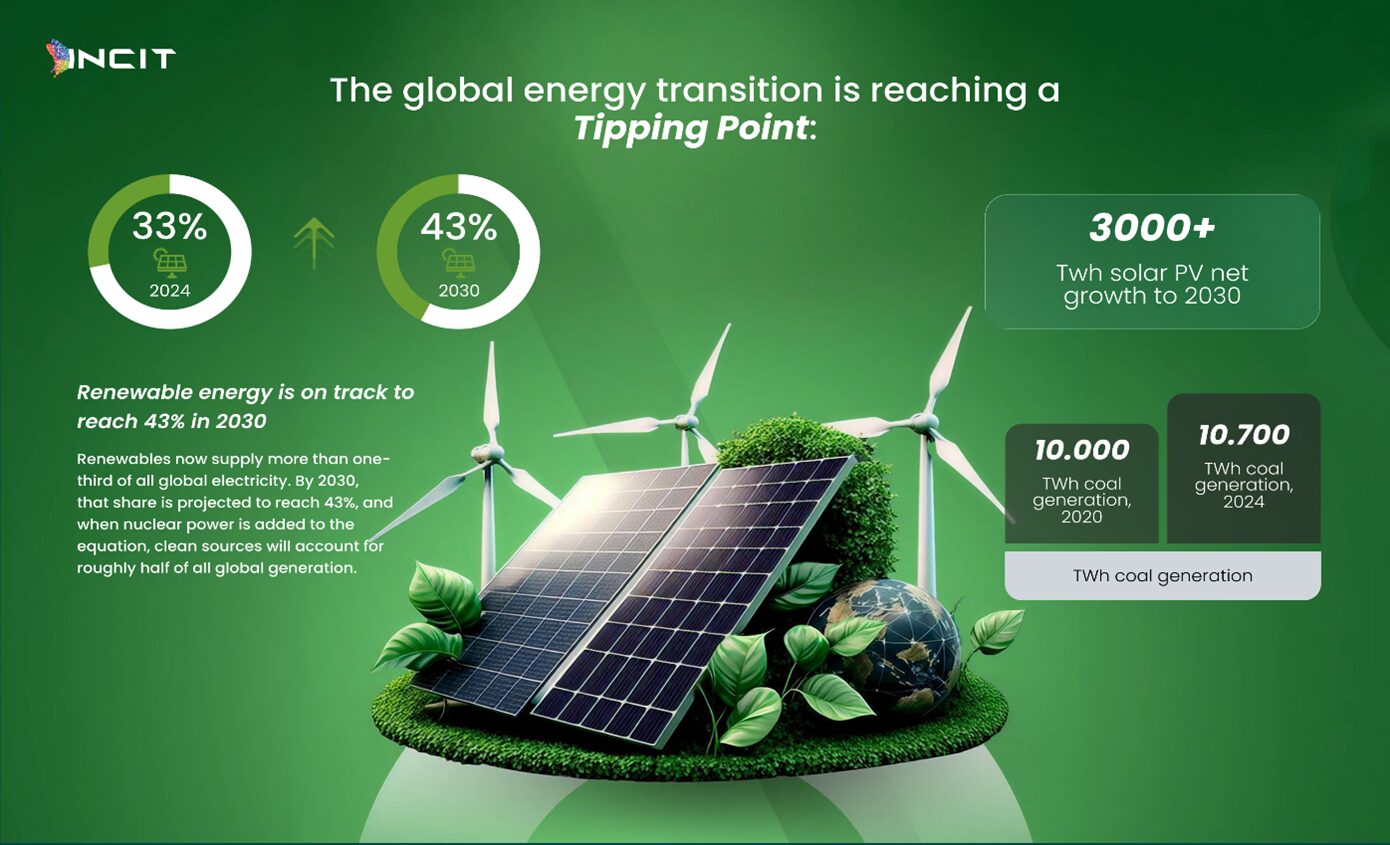
This time, the counter-narrative is no longer aspirational. It is empirical. Renewables are overtaking coal as the world’s largest electricity source, projected to supply 36% of global power against coal’s 32%.
Wind and solar output will exceed 6,000 TWh by year-end. In the US alone, solar, wind, and batteries are adding 62% more capacity than in 2025. Global clean energy investment surpassed $3.3 trillion in 2025. The transition is no longer a climate project. It is an industrial competition, and the nations building clean technology manufacturing capacity are defining the next era of energy sovereignty.
Where It Still Fails: The Factory Floor
Yet macro progress does not equal operational transformation. Only 42% of companies globally have disclosed climate adaptation plans. Corporate clean energy procurement hit a multi-year low in Q3 2025. AI-driven electricity demand could reach 2,200 TWh by 2030. The gap between boardroom pledge and production reality is where energy crises reproduce themselves. What is not measured is not managed. What is not assessed cannot be transformed. This is where COSIRI becomes instrumental.
COSIRI: Closing the Gap
This is the problem INCIT set out to solve. COSIRI, the Consumer Sustainability Industry Readiness Index, is the world’s first independent sustainability maturity framework built for manufacturing. It evaluates 24 dimensions across four building blocks: Strategy and Risk Management, Sustainable Business Processes, Clean Technology, and Organisation and Governance. Its pillars span GHG emissions, energy usage, water, waste, pollution, circular design, procurement, supply chain, climate risk, and more.
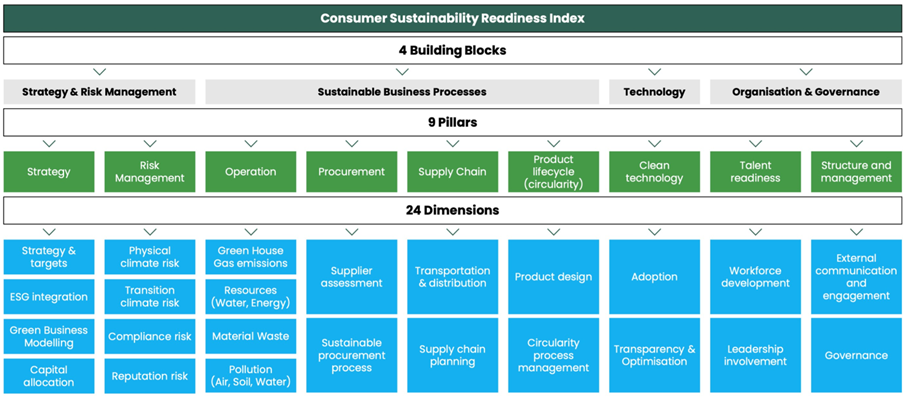
COSIRI does not ask whether a manufacturer has a net-zero pledge. It asks whether that pledge is operationalized at the plant, supported by capital allocation, and embedded in workforce capability.
When energy prices spike, manufacturers who have assessed and strengthened these dimensions are not scrambling. They are resilient. HP used COSIRI to benchmark its Singapore site, validating governance strengths and identifying actionable gaps. Governments across Asia, Europe, and Africa use COSIRI to design data-driven industrial policy. Investors use it for portfolio-level sustainability due diligence.
The crisis of 2026 will pass. Without operational measurement, the next one will find the same gaps. The industry has had 50 years of lessons. It is time for 50 years of measurement.
We are here to help you close the gap in the uncertainly. Contact us at contact@incit.org


